
I’m in Mykonos exploring the main town, old port of Chora and of course, the Windmills of Kato Mili. I have been walking for a while discovering the cobbled streets and sparkling town with its overflow of shops, churches, charm and style.
It is late afternoon by now and luckily I stopped mid afternoon for a delicious gelato to consolidate my strength for the rest of the day, there is still so much to enthuse over.

Kato Mili
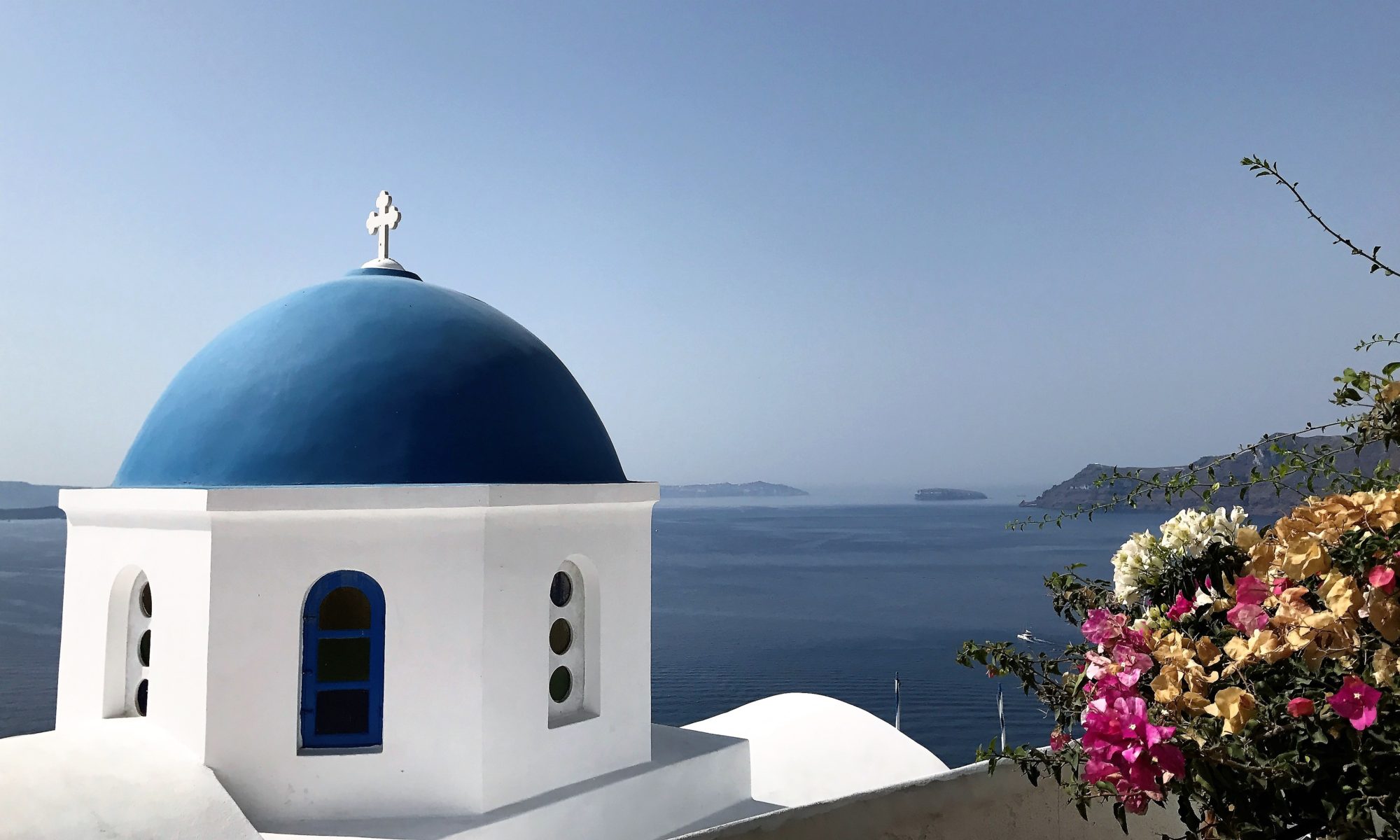
We, my husband, Jason, and I, round a corner and are suddenly out of the maze of streets and faced with a dazzling first glimpse of Kato Mili, the famous windmills of Mykonos. The windmills, alongside views of whitewashed buildings topped by blue domes, are the most iconic sights of the Greek Islands. There are 16 windmills dotting the island, most of which were built in the 16th century by the Venetians to mill wheat. Five of the most famous sit here on the headland, facing north to harness the powerful winds that blow, some of which we are sampling now.

A set of stone steps takes us up the steep slope and away from Little Venice and then behold, we are right at the base of the windmills. There are no restrictions and we wander around, getting right up close to the structures although there is no access inside. They’re bigger and sturdier than they appear from afar yet I still wonder how they’ve survived the wind all these hundreds of years when everything else up here seems to be completely wind swept.

It’s not just the windmills, the views of Little Venice and Chora are delightful. I pause to capture images of it all.
Little Venice
Finally, we descend the stone steps again. Here we stop along the stone beach at the bottom to watch the waves pounding the shore. I snap a few more pictures, this time of the stretch of shops and restaurants known as Little Venice. The connection is as much for their position right on the waterline as for the fact that they were also built by the Venetians.

This little strip built right over the water was originally known as Alefkanthra (derived from ‘kastro’ or ‘castle’). During the 16th Century, ship captains and rich merchants, primarily from Italy settled down and built this neighborhood. Chosen for its proximity to the sea and created in the fashion they brought with them from their homeland. Soon after, piracy became common in the Aegean and a castle was built for protection. This castle later became the first primary school on the island where children were often excused to go fishing (see mymykonosapp.com).

History with a View
Mykonos fell under Roman rule during the era of the Roman Empire. From the 12th century onward, the island endured a series of invasions and occupations. Yet it somehow managed to thrive as a bustling trading port at the same time. Its mythological past is just as colorful. The island takes its name from Mykons, a local hero said to be the grandson of Apollo, the Greek god of the sun. This is a fitting connection, especially today, as the mercury pushes 40 degrees Celsius. It’s the peak of summer and the height of tourist season, with sun worshippers everywhere soaking in the heat.

According to legend, Mykonos also served as the site of a great battle between Zeus, god of the sky and thunder, and the Titans, divine beings of an earlier generation. In the tale, Hercules – Zeus’s mighty son – lured the invincible giants away from the protection of Mount Olympus and defeated them here. As myth has it, the large rocks scattered across the island are the petrified testicles of those fallen giants. Some say these inspired the slang term ‘stones’.

Today’s Mykonos seems a long way from pirates, gods and Venetians. But as we wander back towards the Old Port, stopping to admire the view one last time, almost anything seems possible here.
Good To Know
Kato Mili are just one of the sights to explore in Mykonos Town (Chora) and the rest of Mykonos island is worth exploring in detail. There are some 10 villages as well as plentiful beaches, a maritime museum, an archaeological museum and numerous churches dotted around the island.
Would I Return?
Yes.
Discover more from Dukes Global Adventures
Subscribe to get the latest posts sent to your email.
One Reply to “The Windmills of Kato Mili”